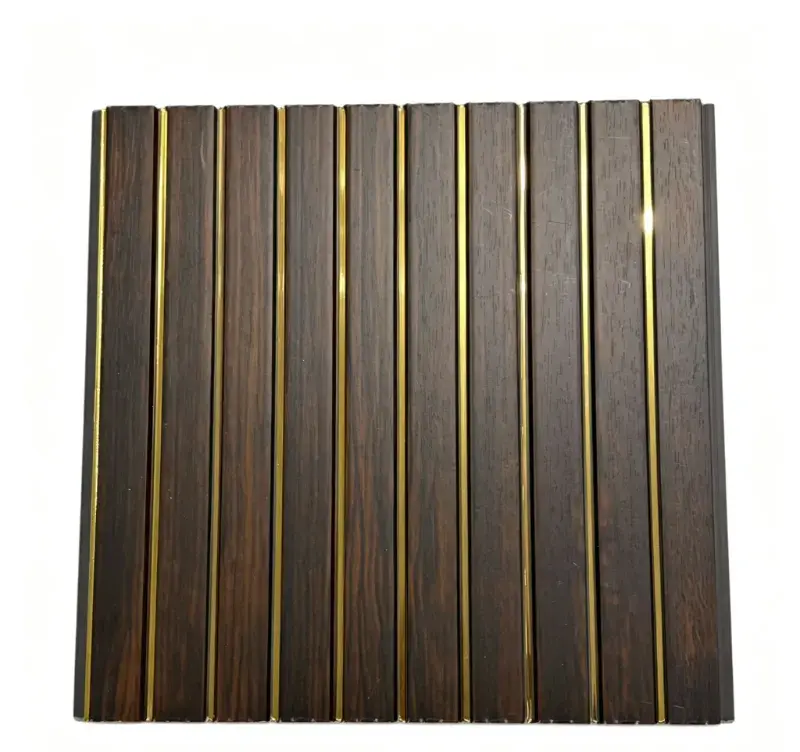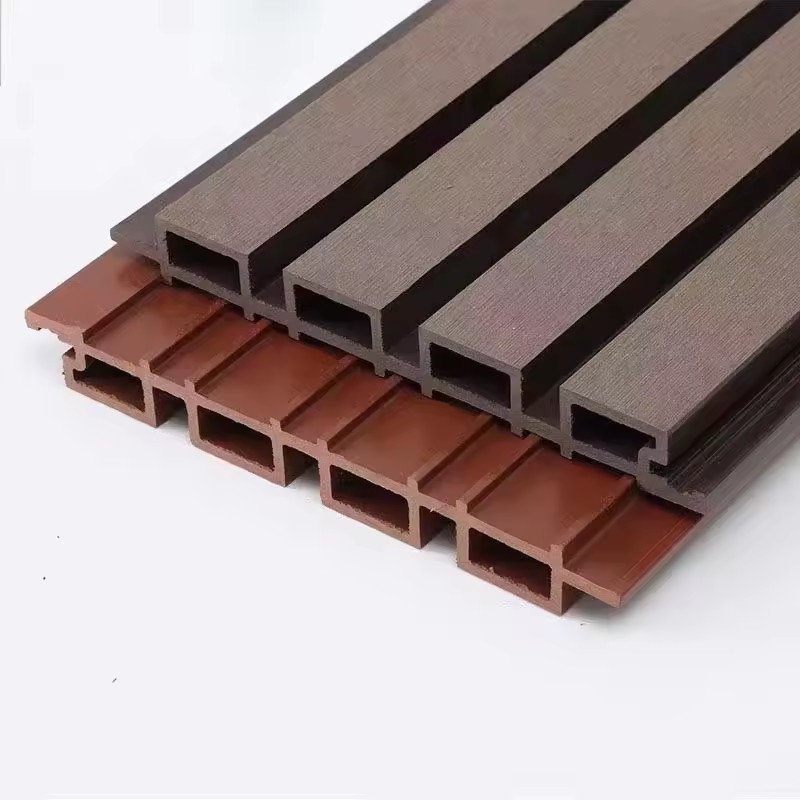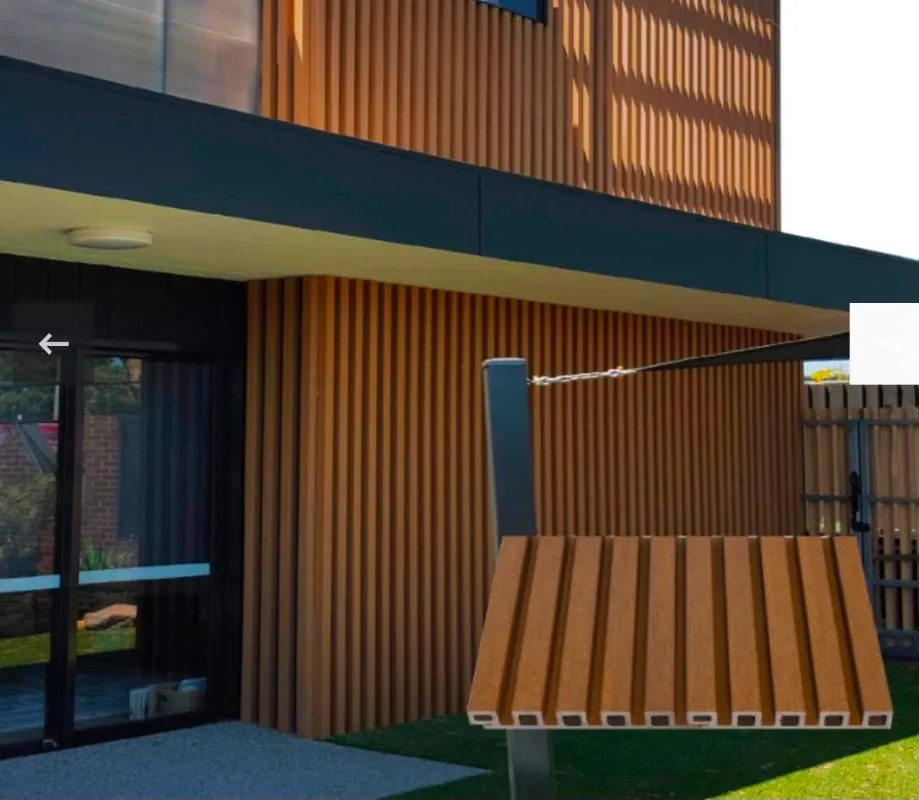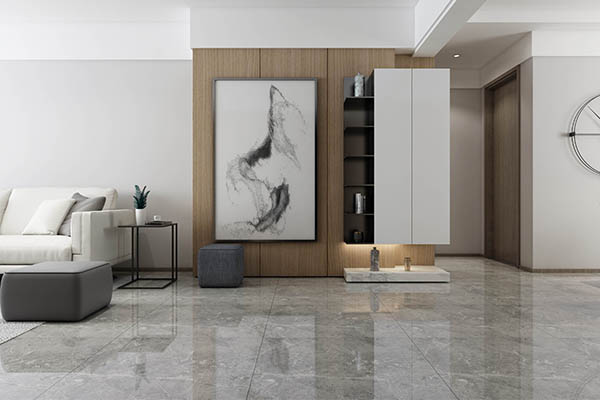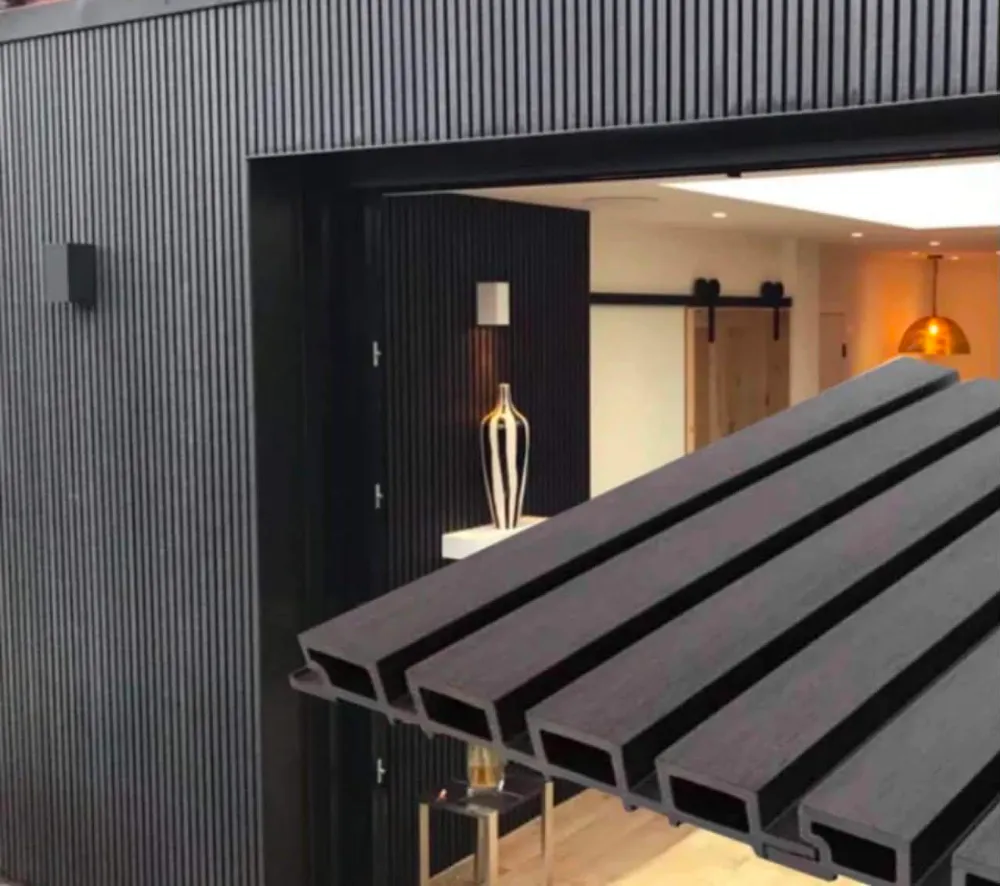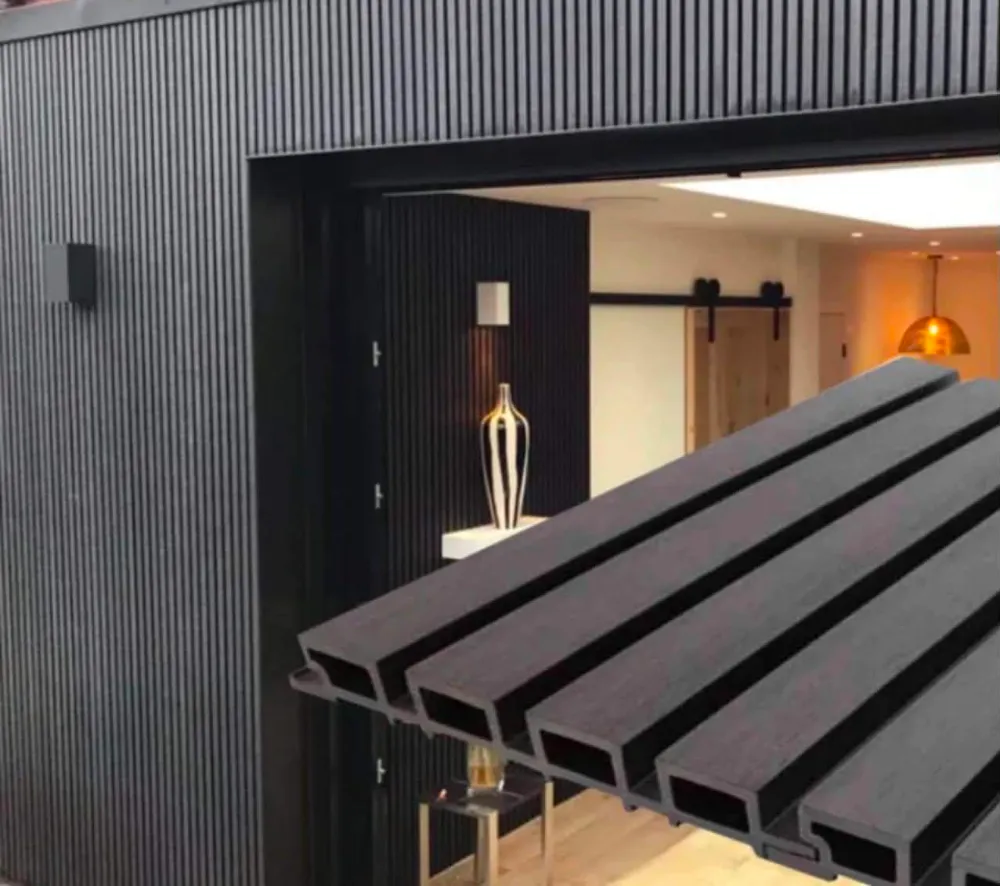

Deep-fluted WPC wall cladding is becoming more visible in contemporary exterior design as architects and facade designers place greater emphasis on surface depth, shadow lines, and material texture. Unlike flat wall panels, fluted profiles create alternating ridges and recessed channels across the surface, producing stronger changes in light and shadow throughout the day.
The trend is not limited to decorative appearance. Changes in extrusion technology, panel consistency, facade detailing, and the wider use of wood-polymer composite materials are also influencing how these profiles are designed and installed.
For many years, exterior wall panels were dominated by relatively flat surfaces with wood-grain or stone-like finishes. These designs remain common, but contemporary facades increasingly use relief, grooves, and layered surfaces to break up large wall areas.
Deep-fluted WPC wall cladding creates this effect through a repeated vertical or horizontal profile. The recessed sections generate darker shadow lines, while the raised sections catch direct light. As a result, the appearance of the facade can change according to viewing angle and sunlight.
The same principle is being applied to commercial buildings, residential exteriors, entrance areas, balconies, and architectural feature walls. Vertical flutes can also visually emphasize building height, while horizontal profiles can make a wall appear wider.
This shift toward dimensional surfaces is part of a broader 2026 design trend in wall panels, where texture and depth are being used to create visual interest without relying on complex decorative elements.
The main difference between a flat panel and a fluted panel is the way the surface interacts with light.
A flat board provides relatively uniform reflection. A fluted profile contains multiple angles and recessed areas, so the facade produces alternating bright and dark lines. Even when the base color remains unchanged, the surface can appear different in morning, midday, and evening light.
Profile depth therefore becomes an important design variable.
| Profile Characteristic | Visual Effect | Common Design Use |
|---|---|---|
| Shallow groove | Fine texture with limited shadow | Large wall areas |
| Medium groove | Clear rhythm and moderate depth | Residential and commercial facades |
| Deep groove | Strong shadow lines and stronger relief | Feature walls and entrance areas |
| Wide spacing | More open visual rhythm | Large architectural surfaces |
| Narrow spacing | Dense linear texture | Decorative sections and accent zones |
The combination of groove depth, spacing, width, and surface finish allows designers to create different appearances from the same basic WPC material.
Color trends are also affecting the appearance of fluted exterior panels.
Dark charcoal, deep brown, walnut, teak-inspired tones, and other muted colors have appeared frequently in recent WPC exterior design discussions. Dark surfaces can make recessed grooves appear deeper because less light reaches the bottom of the profile.
Natural wood colors produce a different effect. Brown and warm neutral tones emphasize the relationship between the wood appearance and the linear profile, while grey tones tend to create a more contemporary architectural appearance.
This has encouraged the use of fluted panels alongside other facade materials rather than covering an entire building with one finish.
Another noticeable direction is material combination.
A large exterior wall does not necessarily need to use one material from top to bottom. WPC cladding can appear alongside concrete, stone, glass, aluminum, or metal panels, with each material providing a different surface texture.
The contrast is particularly visible when a deeply grooved WPC surface is placed next to a smooth material. The fluted section provides repetitive vertical or horizontal lines, while the adjacent material creates a visually quieter surface.
This approach can also divide a building facade into functional areas. For example, a smooth structural wall may remain visually simple while WPC is concentrated around entrances, balconies, covered outdoor areas, or selected facade sections.
Three-dimensional profiles place greater demands on production consistency than simple flat panels.
When a panel contains repeated grooves, even small dimensional differences can become visible after several panels are installed next to one another. Variations in width, thickness, groove spacing, or profile depth may interrupt the visual rhythm of a continuous facade.
Modern extrusion lines therefore increasingly combine automated forming with temperature control and online inspection.
For example, Xinghua Jiajupai New Materials has expanded from two production lines to nine automated extrusion lines, with high-precision laminating equipment, CNC slotting machines, and online quality inspection. Its production process can control wallboard thickness to approximately 0.1 mm, a level of dimensional control that becomes relevant when multiple profiled panels are assembled across a large surface.
The issue is not simply production speed. Consistent profile geometry affects how individual panels align and how continuous grooves appear after installation.
The geometry of a fluted panel affects more than its appearance.
A deeper profile creates more surface relief and can influence how adjacent panels meet, how trims are positioned, and how corners and transitions are detailed. Openings around windows and doors require particular attention because the regular groove pattern may need to terminate or change direction.
Large facade areas can therefore require planning for:
These considerations become increasingly important when the fluted pattern is intended to continue across multiple elevations.
Vertical fluted profiles have gained attention because they can create a strong directional effect.
On low-rise buildings, vertical lines can visually increase the perceived height of a facade. On larger structures, they can divide broad wall surfaces into narrower visual sections.
Vertical profiles also work well around entrances and narrow architectural elements. When combined with warm wood tones, they can soften concrete-heavy exteriors. When paired with dark grey or black finishes, the same geometry can produce a more industrial appearance.
Horizontal flutes remain useful where the design requires stronger horizontal lines, but vertical profiles currently appear particularly compatible with contemporary residential and commercial facade styles.
The boundary between interior and exterior wall finishes is also becoming less rigid.
Fluted WPC panels can be used on interior feature walls and then continued into semi-outdoor or sheltered areas. Using similar colors and textures in adjacent spaces can create visual continuity between an indoor room, balcony, entrance, or covered terrace.
This does not mean the same panel specification is automatically suitable for every location. Indoor and outdoor environments impose different requirements, particularly regarding moisture, ultraviolet exposure, temperature variation, and installation conditions.
Instead, the trend shows how the same profile language can be adapted to different parts of a building.
The growth of textured wall panels is also connected with changes in panel production.
Modern WPC production increasingly involves extrusion, surface lamination, slotting, temperature control, and automated inspection rather than relying on a single forming process. These technologies make it easier to produce repeated profiles at industrial scale while maintaining dimensional consistency.
Xinghua Jiajupai New Materials currently operates nine production lines covering extrusion and related processing. Its production base includes raw material processing, wallboard forming, inspection, and packaging, with annual WPC and PVC wall panel capacity reaching up to 5 million square meters.
For the wider industry, this type of production setup reflects a shift from simple flat decorative boards toward panels with more defined surface geometry and multiple finishing options.

The current trend is likely to develop around several practical variables rather than profile appearance alone.
Profile geometry will remain important as designers experiment with deeper grooves, wider spacing, mixed profiles, and three-dimensional surfaces.
Surface finishes may continue moving toward matte textures, wood-inspired patterns, and colors that work with concrete, stone, and metal.
Dimensional consistency will become more significant as fluted panels are used over larger facade areas. Repeated profiles make deviations easier to see.
Outdoor durability will also remain a consideration for exterior applications. UV exposure, moisture, temperature changes, and installation conditions all affect the long-term behavior of composite wall materials.
Material combinations are another likely direction. Rather than replacing every existing facade material, WPC can be incorporated as one surface element within a mixed-material facade.
The growing use of deep-fluted WPC wall cladding in 2026 reflects a broader movement toward dimensional facade surfaces. The appeal comes from the interaction between profile geometry, light, color, and surrounding materials, while production technology determines how consistently that geometry can be reproduced.
As WPC wall panels move into more visually prominent exterior applications, the discussion is shifting from simply choosing a wood-look surface to considering profile depth, panel consistency, installation details, weather exposure, and how the cladding interacts with other facade materials.
For architects and facade designers, deep fluting is therefore not just another surface pattern. It is becoming one of the ways to control shadow, rhythm, and material contrast across contemporary building envelopes.